How to Experience the Heart of the City at an Irish Pub NYC
New York reveals itself in fragments. A subway platform at rush hour. Steam rising from a street grate on a cold night. The hum of conversation spilling onto a sidewalk after work. For visitors, and even for longtime residents, the city can feel oversized and slightly guarded at first. That is part of its force. It does not always hand itself over easily.
One of the most reliable ways to get past that surface is to spend time in an Irish pub NYC locals actually use. Not just to drink, and not only on St. Patrick’s Day. A good Irish pub in this city functions as a social hinge. It connects office workers, neighborhood regulars, tourists, bartenders, musicians, sports fans, first dates, off-duty servers, and homesick Irish expats in the same room without making the mix feel forced. If you want to understand New York beyond landmarks and reservation lists, that room matters.
I have always thought the best pubs offer a kind of truthful hospitality. They are warm without trying too hard, busy without becoming chaotic, and rooted enough in routine that you can feel the shape of a neighborhood by the way the bar fills up between 5:30 and 7:00 p.m. Some places lean polished, with dark wood, proper pours, and a menu that moves from oysters to shepherd’s pie. Others stay looser and louder, where the Guinness is cold, the televisions carry football and hurling in equal measure, and someone near the end of the bar knows half the room by name. Both have their place. What matters is not whether the pub is old, trendy, or famous. It is whether it gives you a clear line into the life around it.
Why the Irish pub still works in New York
New York has no shortage of bars. Cocktail dens, wine bars, brewery taprooms, hotel lounges, listening rooms, neighborhood dives, rooftop spots with careful lighting, all of them compete for attention. Yet the Irish pub keeps its hold because it answers a practical need that newer concepts often miss. People want a place where they can walk in without ceremony, order something familiar, settle into a rhythm, and stay longer than they planned.
That simplicity is part of the design. A proper pub does not pressure you into performing a version of yourself. You do not need to know obscure spirits or navigate an attitude-heavy wine list. You can come alone, read the room for ten minutes, and feel less alone by the time your pint lands. You can arrive with colleagues after work, speak in normal voices, and still hear one another. You can duck in from the rain with shopping bags, or show up after a Broadway show, or catch the second half of a match that started too early for most Manhattan bars to care about. The format is sturdy enough to absorb all of it.
The better Irish pubs in New York also hold a useful tension. They preserve certain traditions while adapting to the demands of the city. A bartender might pour Guinness with care and still move through a crush of mobile payments and dinner checks with New https://privatebin.net/?7887251a17aec72a#GyNJ7GHyad8xouXg5kRXYpyVBYupiZ2i8zxUr8kg2669 York speed. The kitchen may turn out soda bread, fish and chips, and stew, but also a strong burger because the neighborhood expects one. This combination of continuity and flexibility is deeply New York. Institutions survive here by staying recognizable while never becoming rigid.
The feeling you are actually looking for
Many people say they want atmosphere. That word gets overused, usually as a stand-in for dim lights and old wood. Atmosphere is part of it, but the real draw is social texture. In a strong Irish Pub NYC experience, you are not just sitting in a themed room. You are sharing space with a cross-section of the city at ease with itself.
You notice it in small ways. Two construction workers stand shoulder to shoulder with media assistants still wearing office badges. A solo diner takes a late lunch with a paperback and no one makes it awkward. At a corner table, a family from out of town eats early before a Knicks game. Near the televisions, a cluster of regulars debate whether the barman has any chance of getting through the next half hour without breaking stride. If music starts later, the room shifts again. People do not need to become best friends. The point is that the room allows for overlap.
That overlap is valuable in a city where so much social life has become segmented by industry, income, or neighborhood. An Irish pub at its best levels some of that. It gives the city a common room.
Picking the right pub for the night you want
Not every Irish pub serves the same purpose, and a lot of disappointment comes from mismatched expectations. If you want intimate conversation, the large midtown sports-heavy spot packed with office workers may feel impersonal. If you want crowd energy and a fast-moving bar, the tiny neighborhood local with six stools and a quiet fireplace mood may leave you restless. Knowing what kind of evening you want matters.
Midtown pubs often excel at speed and variety. They are good for pre-theater dinners, after-work pints, and those moments when you need a dependable room in a part of Manhattan that can otherwise feel transactional. The upside is convenience and a broad mix of people. The trade-off is noise, especially on Thursdays and Fridays, and a slightly more transient crowd.
Downtown pubs, especially in neighborhoods with older street grids and more foot traffic, can offer a more layered feel. You may get a stronger sense of local identity, more idiosyncratic decor, and a clientele that returns often enough to shape the room. These places can be excellent for long conversations and unplanned second rounds. The downside is that the very best ones fill quickly, and service can slow when everyone decides to stay all night.
Outer borough pubs often reward the effort of going a little farther. In parts of Queens or Brooklyn with longstanding Irish communities, the pub can function less as a novelty and more as infrastructure. The accents around you may be stronger. The sports calendar may matter more. The regulars may be less interested in entertaining casual curiosity, though they are often kind once they see you understand the room. If your goal is authenticity in the least self-conscious sense, this can be where it lives.
The right choice depends on whether you want access, intimacy, sports, music, food, or neighborhood character. Most people can have two of those in abundance, sometimes three. Very few places offer all five at once.
Timing changes everything
The same pub can feel like three different establishments over the course of a day. Afternoon is often when you can see its bones. Light comes in, the bartenders have a minute, and the room shows whether it has any life without a crowd. If you want to talk, ask questions, and notice the details, this is the smart time to go.
Early evening is when New York’s daily current starts flowing through. This is the hour for after-work pints, quick dinners, and first rounds that turn into three. It is probably the truest snapshot of the city at work and at release. You will get tempo, but not yet the full wall of noise.
Late night is different. On some nights it becomes festive, on others sloppy, and occasionally both. If there is live music, a major match, or a holiday weekend, the room can swell fast. That can be exhilarating if you came for energy. It can also flatten nuance. If your goal is to understand the pub rather than merely pass through it, arriving before the rush gives you a better chance.
Sundays deserve their own mention. A Sunday afternoon in an Irish pub has a particular softness. The city is slower, sports pull people in, and families or older regulars often appear. You get more conversation and less posing. For anyone trying to feel the emotional center of a neighborhood, this is often the best window.
What to order, and why it matters more than people think
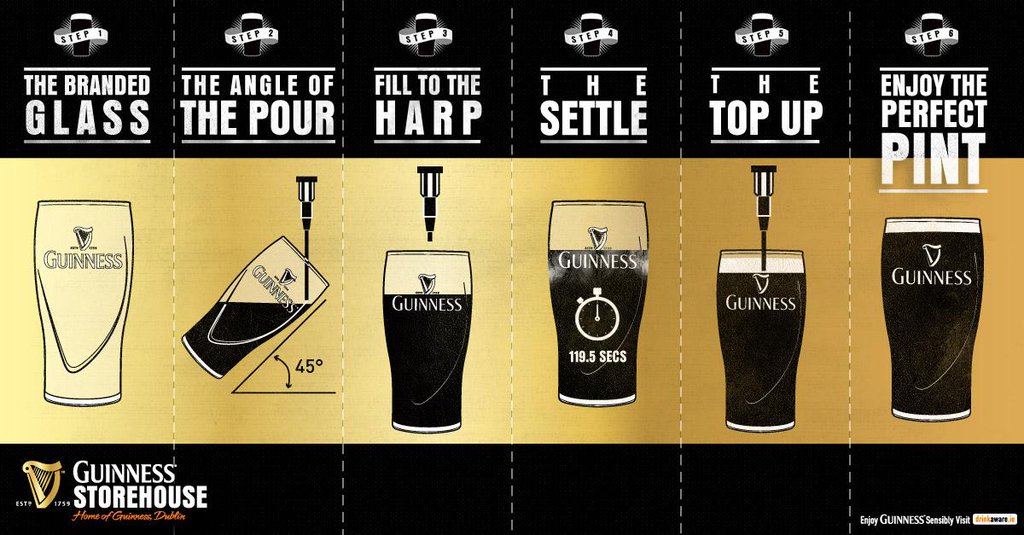
You do not need to order Guinness to belong in an Irish pub, but if the bar takes pride in it, it is worth trying. A well-poured pint is not an affectation. It signals attention to ritual, and ritual is part of why these places endure. You can tell a lot from how the bartender handles it, how the glass looks when it lands, and whether the room treats that care as normal rather than ceremonial.
That said, ordering well is mostly about reading context. If the pub has a deep whiskey selection and the bartender clearly knows it, that can open a better conversation than asking for the most standard draft. If it is a busy pre-show crush and you know you are hungry, ordering a hearty plate early saves frustration later. Food in Irish pubs tends to follow a simple rule: the classics should be comforting, hot, and generous, not overthought. Fish and chips should arrive crisp. Brown bread should taste like someone cares. A stew should feel like it has earned its place on the menu. If a pub gets those basics right, people notice.
There is also no shame in practical ordering. If you are meeting friends, start a tab, keep your choices straightforward, and understand that bartenders in New York appreciate decisiveness. This is not about rushing the experience. It is about respecting the mechanics that make a full room run smoothly.
The bartenders are part of the city’s oral history
One reason the Irish Pub NYC scene remains so compelling is that bartenders often hold more local knowledge than any guidebook. Not because they perform as unofficial concierges, though many can. It is because they watch the city in repeat. They see who comes in before concerts, after funerals, following layoffs, after engagements, during playoff runs, at the end of bad dates, and at the start of better nights. They know which offices still insist on a Wednesday happy hour, which theater crowd tips well, and which neighborhood blocks have changed faster than residents wanted.
If you sit at the bar when it is not slammed and ask a genuine question, where locals eat late, what the pub is like during rugby, whether the kitchen is stronger for lunch or dinner, you often get an answer shaped by experience rather than marketing. That is useful. It is also part of the appeal. Good bartenders translate cities without romanticizing them.
There is a balance to strike. New York rewards self-possession. Ask too much when the bar is buried three rows deep and you become a burden. Ask at the right time, listen properly, and you may leave with a better understanding of the area than an afternoon of walking could provide.
Sports, music, and the social code of the room
Irish pubs often become social anchors through events, especially live sports and music. But those features change the room’s chemistry in specific ways. If there is a major football match, Gaelic games, rugby, Premier League fixture, or a local playoff game, expect allegiance to organize the room. That can be thrilling. Shared attention gives strangers permission to react together. It also means conversation may narrow around the screens.
Live music creates a different kind of closeness. In the best cases, it lifts the room without turning it into a stage set. A traditional session in a back room or near the bar can make the pub feel rooted and generous. A cover band pushing volume too hard can wipe out everything else the room does well. The difference usually comes down to proportion. Good pubs know when music should lead and when it should support.
A simple guideline helps here:
- Go for sports if you want collective energy and easy interaction.
- Go for music if you want atmosphere with memory attached to it.
- Go on a quieter weekday if your goal is conversation and observation.
- Ask staff what the room is like later if you are deciding whether to stay.
That may sound obvious, but many weak nights happen because people drift into a pub expecting one mode and land in another. The city does not always slow down to adjust to your preferences. Better to align with the room that already exists.
Food as comfort, not performance
The menu in an Irish pub can tell you whether the place understands itself. Some menus try too hard to modernize, adding trend-driven dishes that belong elsewhere. Others treat food as an obligation and send out tired freezer fare. The strongest pubs avoid both mistakes. They know that pub food in New York has to satisfy several audiences at once: the person grabbing a solo lunch, the office group sharing plates, the tourist who wants something recognizably Irish, and the regular who has ordered the same meal for years.
When food works in this setting, it tends to be straightforward, filling, and reliable. Seafood chowder on a cold day can do more emotional work than any elaborate tasting menu. Bangers and mash, done properly, hold warmth without heaviness. A shepherd’s pie should taste seasoned and substantial, not decorative. Even the humble burger matters. In New York, where diners have options on every block, a bad burger sends a message that the kitchen is coasting.
Breakfast and brunch can be especially revealing. An Irish breakfast attracts people who know exactly what they came for, and a kitchen that executes it with care usually respects the rest of the menu too. If you happen to be in the city after a long night, or simply want a meal with some ballast before a day of walking, this is one of the more satisfying ways to start.
The neighborhoods speak through their pubs
Spend enough time in different boroughs and you begin to see how the Irish pub reflects local habits. In the Financial District, a pub might pulse hardest on weekdays, then quiet dramatically on weekends. In Hell’s Kitchen, theater traffic shapes dinner service and late evenings. On the Upper East Side or Upper West Side, the room may feel more residential, more paced to local routines than to destination nightlife. In parts of Queens or Woodside, especially, the connection to Irish community life can be more explicit and less curated for outsiders.
This is where the pub becomes more than a place to drink. It becomes a decoding tool. New York’s neighborhoods are dense with signals, but many are hard to read from the sidewalk alone. Inside a pub, patterns sharpen. You learn whether a block belongs mostly to offices or apartments, whether people are lingering because they live nearby or killing time before trains, whether the room is built around old regulars or fresh foot traffic.
For travelers, that perspective can rescue a visit from sameness. Too many itineraries flatten New York into attractions linked by rideshares. A good pub puts you back in the city’s actual metabolism. For residents, it offers a reminder that New York is still a patchwork of communities, not just a marketplace of reservations and rents.
Small etiquette moves that improve the night
Much of feeling at home in an Irish pub comes down to behaving in ways that respect the room. None of this is complicated, but it matters. If the bar is crowded, know your order before you wave anyone down. Tip like someone who understands New York is expensive to work in. Do not occupy a four-top for an hour with one drink if the place is packed and people are waiting to eat. If there is a game on that clearly matters to the room, keep your volume calibrated. If musicians are playing in close quarters, listen for at least a few songs before treating the set as background noise.
The best part is that this etiquette pays you back immediately. Staff become more attentive, neighbors at the bar open up, and the evening gains ease. New York can be impatient with entitlement, but it responds generously to people who notice how things work.
There is also a useful distinction between being curious and being performative. Plenty of visitors want the “real” pub experience. That is fine. But authenticity tends to vanish the moment people demand it on cue. You get more from these places by settling in than by chasing a stereotype. Order, observe, ask the occasional question, and let the pub reveal itself at its own pace.
When the city feels most itself
The heart of New York is not a single skyline view or a famous avenue. It is the accumulation of shared spaces where people drop their guard enough to be ordinary together. That may happen on a stoop, in a diner, on a park bench, or in a corner grocery. It happens in Irish pubs with particular consistency because they are built for repeat use, mixed company, and long memory.
A memorable night in an Irish Pub NYC setting rarely hinges on spectacle. More often, it is the sequence that stays with you: the first cold sip after walking twenty blocks, the conversation with a bartender who knows the neighborhood’s old shape, the shift in the room when a song starts, the feeling that you have stopped consuming the city and started participating in it. You look around and realize that nothing extraordinary is happening, yet the place feels fully alive.
That is the point. The city is easier to love when you find one room where it stops acting like a challenge and starts acting like itself. An Irish pub, when it is done well, offers exactly that. Not a theme, not a shortcut, and not a performance of heritage for strangers. A real room, with real habits, where New York becomes legible one pint, one plate, and one conversation at a time.
Hibernia Bar
401 W 50th St
New York, NY 10019, United States
Phone: +1 212-969-9703
FAQ About Irish Pub NYC
What is the best Irish pub in NYC?
The best choice depends on your location and preferred atmosphere. Hibernia Bar is a neighborhood Irish pub in Hell's Kitchen offering Guinness, Irish whiskey, pub food, and sports viewing.
Where do Irish people go in NYC?
New York's Irish community gathers in many neighborhoods and venues. Hibernia Bar welcomes Irish expats, local residents, and visitors at 401 W 50th St, just off Ninth Avenue.
Where can I watch GAA games in New York?
Hibernia Bar lists GAA among the sports it shows. Call +1 212-969-9703 to confirm coverage and opening times for a particular match before visiting.
What is the difference between a bar and a sports bar?
A sports bar emphasizes televised games and a shared viewing atmosphere. Hibernia combines sports viewing with the food, drinks, and hospitality of a neighborhood Irish pub.